
A World Bank-supported project of the Government of Vanuatu
Vanuatu Affordable and Resilient Settlements Project (VARS)
Improving community infrastructure, services, and land planning to build safer, more resilient settlements.
Project Management Unit: +678 555 1551 or +678 774 9233 |
Project Videos
VARS Project Background
The Vanuatu Affordable and Resilient Settlements (VARS) Project is a Government of Vanuatu initiative supported by the World Bank. The Project Development Objectives are to improve access to, and resilience of, infrastructure and services in selected new and existing settlements, and strengthen land planning and management for resilient human settlements.
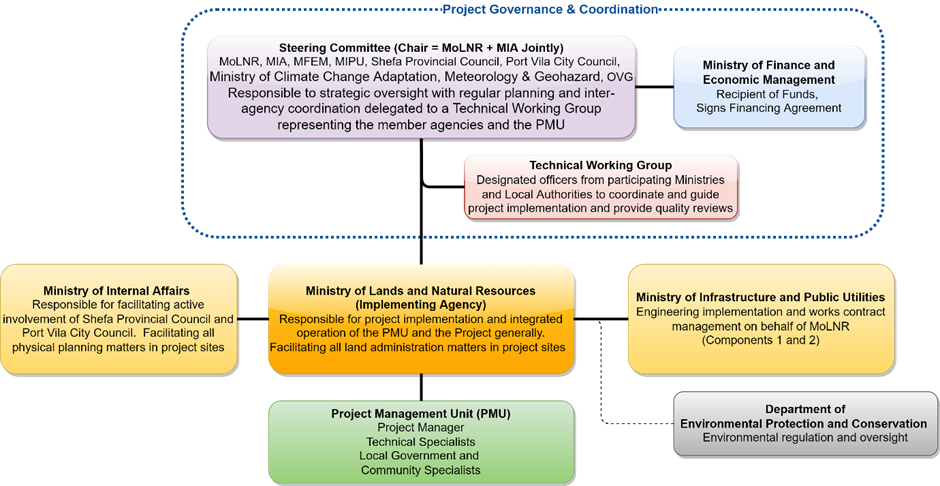
The Ministry of Finance and Economic Management is the Executing Agency, and the Ministry of Lands and Natural Resources (MoLNR) is the Implementing Agency, supported by a dedicated Project Management Unit and partner agencies.
The original US$25 million International Development Association grant was supplemented by US$28 million in Additional Financing approved in March 2026. This comprises US$12 million to replenish resources redirected through the Rapid Response Option following the December 2024 earthquake, and US$16 million for expanded activities. US$41 million is allocated to project components.
Project Components
Elol Etas Subdivision
Develops Elol Etas Subdivision, providing approximately 130 serviced residential lots to improve access to affordable land. The construction of approximately four (4) Low Cost Model Homes will demonstrate affordable, resilient construction, while the Etas Market and Bus Exchange will support livelihoods, public transport and community access to services.
Existing Settlement Upgrades
Upgrades infrastructure in Tokyo, Seaside, Ohlen Mataso and Anamburu. Works include road improvements, pathways and accessible ramps, drainage and flood mitigation, community and street lighting, and waste-management through elevated community trash racks. These investments aim to improve safety, accessibility, living conditions and disaster resilience.
MoLNR Institutional Capacity Building
Strengthens institutional capacity through organisational reform, corporate planning, staff development, improved land administration and digital land and revenue-management systems. It also supports a new resilient, accessible and energy-efficient MoLNR headquarters to improve public service delivery and safeguard national land records.
Contingent Emergency Response Component (CERC)
Allows project funds to be reallocated to support urgent response and recovery following an eligible crisis or emergency. It has no initial funding allocation and can be activated at the Government’s request, subject to World Bank approval and applicable operational and safeguards requirements.
Implementation Arrangements
Institutional and implementation arrangements are shown in Figure 1.
Safeguards Documents
All environmental and social safeguards documents are disclosed to the public.
Environmental and Social Commitment Plan (ESCP)
The Environmental and Social Commitment Plan (ESCP) sets out the measures and actions the Government of Vanuatu has committed to undertake so that VARS meets the World Bank’s Environmental and Social Standards.
The ESCP specifies responsibilities and timeframes for safeguards instruments, staffing, stakeholder engagement, monitoring and reporting, and forms part of the project’s legal obligations under the Financing Agreement.
Environmental and Social Management Framework (ESMF)
The Environmental and Social Management Framework (ESMF) establishes how VARS identifies, assesses and manages environmental and social risks across project activities.
It guides screening, preparation of site-specific safeguards instruments, mitigation, monitoring and implementation responsibilities, consistent with Vanuatu’s requirements and the World Bank’s Environmental and Social Standards.
Component 1 – Elol Etas Subdivision
Component 1 supports affordable and resilient new settlement development through the Elol Etas Subdivision, providing approximately 130 serviced residential lots with roads, drainage, water, electricity and open spaces. It also supports construction of approximately four (4) Low Cost Model Homes to demonstrate affordable, resilient construction, and the Etas Market and Bus Exchange will support livelihoods and access to public transport. The component strengthens planning and systems to guide future settlement development. The following safeguards instruments have been prepared to ensure compliance with the ESMF.
Etas LDDR – Land Due Diligence Report
Documents land ownership, customary landholder consent, negotiated benefits and land-related impacts associated with the subdivision.
Stakeholder Engagement Plan (SEP)
Sets out how stakeholders are informed and consulted, including arrangements for raising and resolving grievances.
Environmental and Social Impact Assessment (ESIA) and Management Plan (ESMP)
Assess the subdivision’s environmental and social risks and specify mitigation measures, responsibilities and monitoring.
Environmental Impact Assessment (EIA)
Prepared to meet the DEPC environmental approval process and establish environmental protection and monitoring requirements.
Component 2 – Existing Settlement Upgrades
Component 2 provides upgrades to infrastructure in Tokyo, Seaside, Ohlen Mataso and Anamburu through road improvements, drainage, pathways and accessible ramps, community and street lighting, and waste-management measures. These works aim to improve living conditions, safety, accessibility and resilience to flooding. The supporting safeguards instruments are:
Site-specific Environmental and Social Management Plans (ESMPs)
Set out measures to manage environmental and social risks during construction and operation, with responsibilities and monitoring requirements.
Site-specific Stakeholder Engagement Plans (SEPs)
Guide stakeholder information, consultation, community liaison and grievance handling.
Ohlen Mataso Abbreviated Resettlement Action Plan (ARAP)
Addresses the relocation of the household affected by works within the road reserve, including assistance and follow-up monitoring.
Ohlen Mataso Land Due Diligence Report (LDDR)
Documents the negotiated acquisition of portions of two leasehold titles for the expanded infiltration basin, including consultation, valuation, agreements and payment requirements before works commence on the acquired land.
Component 3 – MoLNR Institutional Capacity Building
Component 3 strengthens institutional capacity through organisational reform, corporate planning, staff development, and modernisation of land administration and revenue-management systems. It also supports a new resilient, accessible and energy-efficient MoLNR headquarters to improve public service delivery and protect national land records. The supporting safeguards instruments include:
Headquarters Site Demolition ESMP
Sets out environmental and social mitigation and monitoring measures for demolition, including worker and community safety and waste management. The demolition is an associated facility of VARS but is carried out separately, outside the project.
MoLNR Headquarters Stakeholder Engagement Plan (SEP)
Guides consultation and information sharing with departments, staff, partner agencies and other stakeholders to inform the new headquarters’ design, including accessibility and public-service needs.
VARS Newsletters
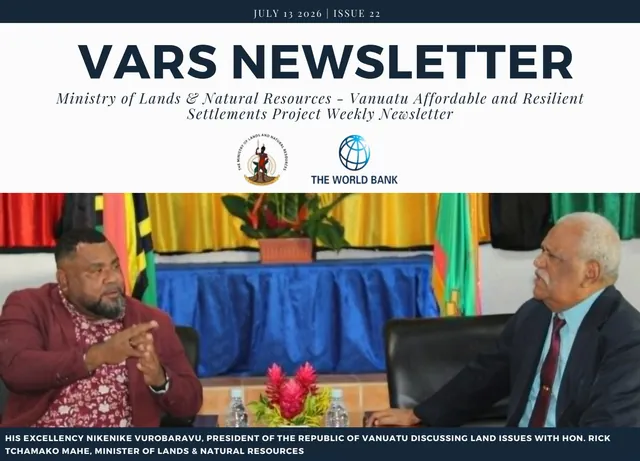
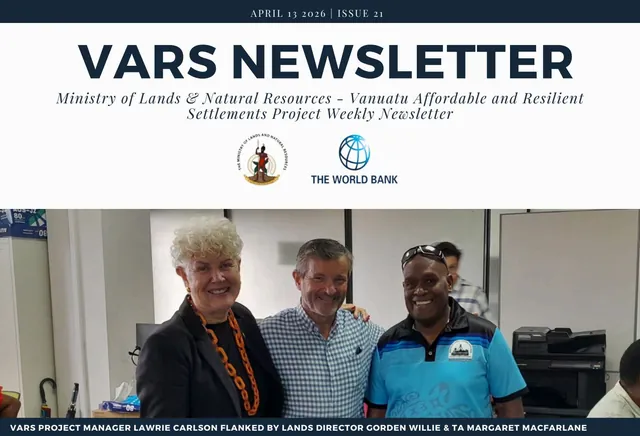
22 issues to date. The two latest are below; every issue is under “All Issues”.
VARS Help Desk
The Help Desk at the Project Management Unit (PMU) is established to receive your calls or email and will help project stakeholders to receive information or register a request for design change or to resolve any concerns that may arise as a result of the project. The PMU records each matter, coordinates responses with relevant agencies or contractors, and tracks follow-up actions and resolution through the Help Desk Register.
The Help Desk is set up to:
- Respond to requests for information or requests for project design change;
- Receive and resolve complaints; and
- Address and resolve grievances in a timely, effective and efficient manner that satisfies all parties involved.
Contractor Community Liaison Officers
Complaint forms are also available from the works contractors. Contact the Community Liaison Officer for your site:
Send a Request or Complaint
Use this form to ask a question, request a change to the project design, or raise a complaint or grievance.
- Choose the type of request and describe the problem.
- Answer the remaining questions: when it happened, where, what was affected, who is involved and your proposed solution. For the tick-box questions, choose at least one answer.
- Give your name, phone number, email and home address or location so the Project Management Unit can follow up with you. If you are completing this form on behalf of someone else, you may choose to leave the claimant’s details blank to protect their identity.
All fields marked * must be filled in. Everything you send is treated confidentially by the Project Management Unit.